Health & Safety Policy — Commercial Waste Removal West Ham
 Purpose and scope: This Health and Safety policy sets out the commitments and procedures that govern our commercial waste removal services. It applies to all activities related to commercial waste collection, transfer and disposal undertaken by the company, including on-site rubbish collection, skip management and commercial rubbish removal operations. The policy defines responsibilities, safe systems of work, and the framework for ensuring compliance with statutory obligations. Our objective is to protect staff, contractors, clients and the public by preventing accidents, incidents and occupational ill-health while delivering reliable commercial waste services.
Policy statement: We commit to maintaining a safe working environment for every member of the team and all site visitors. The organisation will allocate the necessary resources to identify and manage hazards inherent in waste collection and disposal. Key priorities include safe manual handling, controlled handling of hazardous materials, secure vehicle operations and maintaining appropriate personal protective equipment (PPE). Our approach balances operational efficiency with a proactive health and safety culture across all commercial waste removal activities.
Responsibilities
Senior management holds ultimate responsibility for ensuring the policy is implemented and reviewed. Supervisors and team leaders are responsible for day-to-day enforcement of safe working practices and for ensuring staff receive relevant training. Every employee engaged in commercial rubbish collection is required to adhere to safe systems, report hazards promptly and participate in on-the-job training. Contractors and subcontractors must operate under the same standards and provide evidence of competence and insurance before undertaking any work.Risk assessment and control measures
A robust risk assessment process is central to operation. Assessments are conducted prior to new contracts and reviewed periodically or after any incident. Controls include:- Elimination or reduction of hazards at source where feasible;
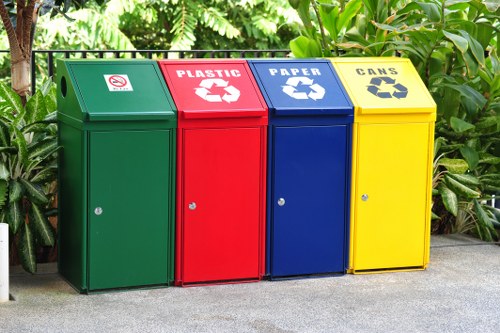
- Safe storage and segregation of different waste streams to reduce contamination risks;
- Implementation of engineering and administrative controls to limit exposure to hazardous substances.
 PPE and equipment: Appropriate PPE must be worn at all times during operations, including high-visibility clothing, gloves suitable for the waste type, eye protection and steel-toe footwear where required. All equipment such as compactors, lifting gear and refuse collection vehicles are inspected and maintained according to manufacturer recommendations and statutory requirements. Faulty equipment is taken out of service immediately and reported to the supervisor.
Training and competence: Staff undertake mandatory induction and receive role-specific training covering safe lifting techniques, hazardous waste handling, vehicle safety, and emergency response. Refresher training is provided periodically and when changes in operations occur. Training records are retained as part of compliance documentation. New or temporary operatives receive supervision until deemed competent to perform their duties safely.
Hazardous waste and COSHH: When handling potentially hazardous materials, including chemical, biological or sharp wastes, the company follows recognised control measures. Material Safety Data Sheets (MSDS) or similar information is accessible for substances encountered during commercial waste removal. Waste segregation procedures reduce the risk of dangerous reactions during storage and transport. Where applicable, hazardous loads are documented, transported and disposed of in accordance with regulatory requirements.
 Vehicle and driver safety: Drivers and vehicle operators must comply with vehicle safety policies, including load restraint, secure containment of waste and adherence to road safety regulations. Pre-shift vehicle checks are mandatory and recorded. Night-time and adverse-weather operations are risk-assessed and additional controls such as escorts, enhanced lighting or suspension of high-risk activities are used when necessary.
 Incident reporting, investigation and emergency procedures: All accidents, near-misses and environmental incidents are reported immediately and recorded. A formal investigation is carried out to determine root causes and to implement corrective actions that prevent recurrence. Emergency procedures for spills, fires and medical incidents are in place and are practised through periodic drills. Where health surveillance is required, the company will provide access to assessments to monitor worker well-being.
Monitoring, auditing and continuous improvement: Health and safety performance is monitored through regular workplace inspections, safety audits and review of incident statistics. Key performance indicators include incident rates, training completion and equipment inspection records. Findings drive continuous improvement actions and management review sessions to ensure the policy remains effective and aligned with operational needs in commercial waste removal.
Documentation and compliance: The organisation maintains records of risk assessments, method statements, training, vehicle checks and equipment maintenance. This documentation supports compliance with applicable laws and industry standards and is available for inspection by authorised bodies. The policy is reviewed at least annually or sooner when operational changes, legislative updates or significant incidents warrant a revision.
Worker involvement and communication: Employees are encouraged to participate in safety committees, hazard reporting and toolbox talks to share practical insights from daily operations. Clear channels for communication ensure that changes to procedures or identified risks are promptly disseminated. This collaborative approach helps embed a culture of shared responsibility for safety across all aspects of commercial rubbish collection and waste removal services.
Final statement: The organisation recognises that effective health and safety management is essential to delivering dependable commercial waste services. Through diligent application of this policy, ongoing training, and continuous monitoring, the company seeks to protect people and the environment while maintaining operational excellence in all aspects of commercial waste removal and rubbish collection.
